
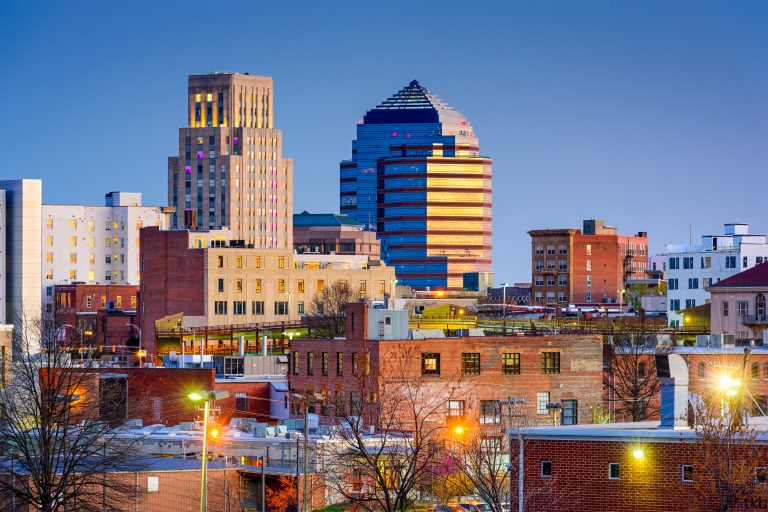
Durham, North Carolina, has become one of the Triangle’s most desirable places to live, offering a combination of established neighborhoods, newer residential communities, major universities, healthcare facilities, restaurants, entertainment, parks, and employment opportunities.
Known as the “Bull City,” Durham has changed considerably over the past several decades. Historic tobacco warehouses have been transformed into restaurants, offices, apartments, and entertainment destinations, while new residential development continues to expand throughout the city and surrounding areas.
For prospective home buyers, Durham offers everything from historic homes near downtown to suburban neighborhoods, townhomes, condominiums, and new construction. For current homeowners, the city’s continued growth and popularity make the local housing market worth watching.
But buying a home is about more than the property itself. Schools, commute times, healthcare, shopping, recreation, and everyday quality of life all influence where people ultimately decide to live.
Here is a closer look at what life in Durham, North Carolina, has to offer.
Durham’s Location in the Triangle
One of Durham’s biggest advantages is its location within North Carolina’s Research Triangle.
Durham is part of the Raleigh-Durham-Chapel Hill region and sits conveniently between Raleigh and Chapel Hill. Interstate 40, Interstate 85, NC Highway 147, and other major roads provide access throughout the Triangle.
Research Triangle Park, commonly called RTP, is located between Durham and Raleigh and remains one of the country’s best-known research and technology employment centers.
Raleigh-Durham International Airport is also conveniently accessible from many parts of Durham, an important advantage for residents who travel frequently for business or leisure.
Durham’s central Triangle location means residents can enjoy the city’s own amenities while having relatively easy access to Raleigh, Cary, Chapel Hill, Morrisville, and other nearby communities.
What Is It Like to Live in Durham?
Durham doesn’t have just one personality.
Downtown offers restaurants, entertainment, apartments, condominiums, historic architecture, and a more urban atmosphere. Neighborhoods surrounding downtown can provide older homes, mature trees, and established communities.
Travel farther from the city center and the landscape gradually becomes more suburban, with larger residential developments, townhome communities, shopping centers, and newer construction.
Northern Durham offers another experience, with lower-density residential areas and easier access to lakes, parks, and natural surroundings.
This variety is one reason Durham appeals to a broad range of home buyers. Someone searching for a downtown condominium can have very different priorities from a buyer looking for a larger detached home with a yard, yet both can potentially find what they want within the Durham area.
Durham Neighborhoods and Residential Areas
Choosing where to live in Durham often begins with deciding what type of lifestyle you want.
Trinity Park, Watts-Hillandale, Forest Hills, Old West Durham, and other established areas are known for their character, mature landscaping, and proximity to central Durham.
Hope Valley has long been associated with established residential neighborhoods in southern Durham, including properties surrounding the Hope Valley Country Club area.
South Durham has experienced substantial residential and commercial development and offers convenient access to Interstate 40, Research Triangle Park, shopping, restaurants, and communities closer to Chapel Hill.
Areas near Southpoint are particularly popular with residents who want suburban living while remaining close to major retail and transportation corridors.
Downtown and nearby districts offer condominiums, apartments, renovated buildings, townhomes, and homes within convenient reach of restaurants, entertainment, and employment centers.
Northern Durham becomes progressively less urban, offering established neighborhoods as well as properties with more space and access to outdoor recreation.
Rather than asking which Durham neighborhood is universally “best,” home buyers should compare neighborhoods according to their own priorities, including commute, housing style, price range, lot size, schools, amenities, and proximity to entertainment.
The Durham Housing Market
Durham’s housing market has changed dramatically along with the broader Triangle.
Population growth, employment opportunities, Research Triangle Park, Duke University, healthcare institutions, and continued business investment have all contributed to housing demand.
Buyers can find a wide range of properties, including older single-family homes, renovated historic properties, suburban houses, townhomes, condominiums, luxury homes, and new construction.
Housing costs vary considerably depending on neighborhood, age, condition, square footage, lot size, and proximity to employment and entertainment centers.
Downtown redevelopment has also expanded the market for buyers interested in more urban living, while development in southern and southeastern portions of the city has increased the supply of newer suburban housing.
For sellers, neighborhood-level conditions are particularly important. Two homes with similar square footage can perform differently depending on location, condition, renovations, school assignment, lot characteristics, and nearby competition.
For buyers, this means researching individual neighborhoods rather than relying solely on citywide housing statistics.
Cost of Living in Durham
Durham offers many of the advantages associated with a growing metropolitan area, but prospective residents should consider the complete cost of living rather than looking only at home prices.
Housing is usually the largest expense, but property taxes, homeowners insurance, utilities, transportation, maintenance, and homeowners association fees can significantly affect the true cost of owning a particular property.
Newer townhome and condominium communities may have HOA dues but potentially require less exterior maintenance. Older homes may offer larger lots, established neighborhoods, and distinctive architecture but can occasionally require additional maintenance or updating.
Transportation costs can also depend heavily on where a resident lives and works.
Someone working from home or commuting a few miles to Duke may have very different expenses from someone traveling daily across the Triangle.
Understanding these differences can help buyers establish a more realistic housing budget before beginning their search.
Schools and Education
Education is a major part of Durham’s identity.
Durham Public Schools serves students throughout much of the area, while charter, magnet, private, and specialty educational options provide additional choices.
School assignments and programs can change, making it important for families to verify current information directly with the appropriate school system rather than relying exclusively on real-estate listings or older neighborhood information.
Higher education also plays an unusually prominent role in the community.
Duke University is internationally recognized for education, research, medicine, and athletics. North Carolina Central University, a historically Black university with roots dating to 1910, is another major Durham institution.
Nearby universities and colleges throughout Raleigh, Chapel Hill, and the broader Triangle further contribute to the region’s highly educated workforce.
These institutions don’t simply educate students. They support jobs, research, healthcare, athletics, cultural programs, lectures, performances, and community activities that influence everyday life in Durham.
Employment and Research Triangle Park
Durham is located within one of North Carolina’s most important employment regions.
Healthcare and higher education are major economic sectors, particularly through Duke University and Duke University Health System.
Research Triangle Park provides another major employment center. Established in 1959, RTP encompasses approximately 7,000 acres and is home to hundreds of companies and organizations working across technology, life sciences, research, and related industries.
Durham’s economy also includes government, professional services, startups, hospitality, retail, construction, and small businesses.
For home buyers relocating for work, commute patterns deserve careful consideration. A house that appears relatively close to an employer on a map can have a very different commute depending on traffic patterns and the roads required to reach it.
Testing a potential commute during the actual hours you expect to travel can provide a much better picture than simply calculating mileage.
Healthcare in Durham
Healthcare is one of Durham’s strongest resources.
Duke University Hospital is a nationally recognized academic medical center and serves as a major healthcare destination for patients from throughout North Carolina and beyond.
Durham is also home to the Durham VA Health Care System and numerous clinics, specialists, urgent care facilities, dental practices, and other healthcare providers.
UNC Health facilities in nearby Chapel Hill and additional medical providers throughout the Triangle further expand the healthcare options available to Durham residents.
For retirees, families, and people planning to remain in their homes long term, proximity to high-quality medical care can be an important factor when choosing a community.
Shopping and Everyday Convenience
Durham offers a combination of major shopping destinations and smaller neighborhood commercial districts.
The Streets at Southpoint is one of the city’s primary shopping destinations, combining an enclosed mall with outdoor shopping and dining areas.
Other parts of Durham provide grocery stores, big-box retailers, specialty shops, pharmacies, restaurants, fitness centers, and everyday services.
Downtown offers a different shopping experience, with locally owned businesses, restaurants, galleries, entertainment venues, and specialty stores integrated into the urban environment.
Residents can also reach additional shopping destinations in Chapel Hill, Cary, Morrisville, and Raleigh without leaving the Triangle.
Restaurants and Durham’s Food Scene
Food has become an important part of Durham’s identity.
The city offers everything from barbecue and Southern cooking to international cuisine, bakeries, coffee shops, breweries, cocktail bars, food halls, and chef-driven restaurants.
Downtown Durham has become one of the area’s primary dining destinations, but noteworthy restaurants can be found throughout the city.
The variety is particularly useful for residents because dining can easily become part of a larger evening out.
Dinner downtown can be followed by a Durham Bulls baseball game, a performance at the Durham Performing Arts Center, live music, or another downtown activity.
For people relocating from larger metropolitan areas, Durham’s growing restaurant scene can help provide the variety they are accustomed to while maintaining the accessibility of a smaller city.
Parks and Outdoor Recreation
Durham provides numerous ways to enjoy the outdoors.
The city’s park system includes neighborhood parks, athletic fields, playgrounds, recreation centers, greenways, and multi-use trails.
The American Tobacco Trail is one of the area’s most recognizable recreational resources, providing miles of trail for walking, running, and cycling.
Eno River State Park offers a dramatically different environment, with wooded hiking trails and access to the Eno River only a short distance from developed areas of Durham.
Sarah P. Duke Gardens provides 55 acres of landscaped gardens on Duke University’s campus and is one of the city’s best-known destinations for walking, photography, and relaxation.
Nearby lakes and recreational areas provide additional opportunities for fishing, boating, hiking, picnicking, and spending time outdoors.
For home buyers who value outdoor recreation, proximity to trails and parks may be worth considering alongside more traditional criteria such as square footage and commute time.
Sports and Entertainment
Sports are deeply connected to Durham’s identity.
The Durham Bulls provide professional Minor League Baseball at Durham Bulls Athletic Park, one of downtown’s signature entertainment destinations.
Duke University athletics bring nationally recognized college competition to the city, particularly men’s and women’s basketball. Cameron Indoor Stadium is one of college basketball’s most famous venues.
North Carolina Central University adds another strong collegiate sports presence.
The Durham Performing Arts Center, or DPAC, anchors the city’s live entertainment scene with Broadway productions, concerts, comedy, and special performances.
The Carolina Theatre provides movies, concerts, comedy, festivals, and other events, while smaller music venues, galleries, and performance spaces contribute to Durham’s independent arts scene.
For residents, this means many entertainment options are available without needing to travel to Raleigh or elsewhere in the Triangle.
Getting Around Durham
Durham remains primarily a car-oriented city, particularly for residents living outside downtown.
However, walkability varies considerably by neighborhood.
Downtown residents may be able to walk to restaurants, entertainment venues, offices, parks, and other destinations. Some established neighborhoods near downtown also offer convenient pedestrian access to local businesses.
More suburban communities generally require a vehicle for most daily errands.
Public transportation is available through GoDurham bus service, while regional transportation options connect Durham with other Triangle destinations.
For frequent air travelers, access to Raleigh-Durham International Airport is another significant advantage.
When choosing a home, buyers should think about transportation in practical terms: Where will you work? Where will you shop? How frequently will you travel to Raleigh or Chapel Hill? How important is walkability?
The answers can substantially influence which part of Durham makes the most sense.
Downtown Durham and the City’s Transformation
Downtown Durham provides one of the clearest examples of how much the city has changed.
Former tobacco and industrial buildings have been renovated into apartments, offices, restaurants, hotels, and entertainment destinations.
The American Tobacco Campus is perhaps the most recognizable example, sitting alongside Durham Bulls Athletic Park and close to DPAC.
Elsewhere downtown, historic buildings stand beside newer development, restaurants, breweries, apartments, offices, and public spaces.
This redevelopment has helped transform downtown into a place where people increasingly live, work, dine, and spend their leisure time rather than simply commute into during business hours.
Is Durham a Good Place to Live?
Whether Durham is the right place to live depends on what someone wants from a community, but the city offers an unusually broad combination of amenities.
Residents have access to major employment centers, nationally recognized healthcare, universities, professional and college sports, performing arts, restaurants, parks, trails, shopping, and Raleigh-Durham International Airport.
Housing choices are equally diverse.
Buyers can consider historic neighborhoods, suburban communities, downtown condominiums, townhomes, luxury properties, and new construction without leaving the Durham area.
Perhaps most importantly, Durham has developed an identity separate from its Triangle neighbors. Raleigh, Cary, and Chapel Hill each offer their own advantages, but Durham’s mixture of university culture, historic architecture, adaptive redevelopment, sports, food, arts, and outdoor recreation gives the Bull City a character of its own.
Finding Your Place in Durham
For prospective home buyers, discovering Durham is ultimately about finding the part of the city that matches the way they want to live.
A buyer who wants restaurants and entertainment within walking distance might concentrate on downtown and nearby neighborhoods. Someone who wants newer construction and convenient access to RTP may prefer South Durham. Another buyer may prioritize an established neighborhood with mature trees, while someone else may want more space farther from the urban core.
There is no single Durham lifestyle, and that may be one of the city’s greatest strengths.
Before purchasing a home, buyers should spend time exploring different parts of Durham at different times of day. Drive the commute, visit nearby grocery stores and parks, explore local restaurants, and see how long it takes to reach the places that will be part of everyday life.
For sellers, understanding these lifestyle advantages can be equally important. Buyers aren’t simply purchasing bedrooms, bathrooms, and square footage. They’re purchasing access to a neighborhood and everything surrounding it.
Durham offers a compelling combination of housing, employment, education, healthcare, entertainment, outdoor recreation, and community life. As the Triangle continues to grow, the Bull City remains an important part of the region—and a place well worth exploring for anyone considering buying or selling a home in the Durham area.